In partnership with


Table of Contents:
AI on the Ambulance: ChatGPT Shows Promise as a Prehospital Diagnostic Aid
Region of the Week
AI in the Paramedicine: Canadian Review Explores Technology's Potential to Transform Prehospital Care
Read Time: 3 minutes

Decision Making
A groundbreaking study tested ChatGPT's ability to predict diagnoses from real prehospital patient care reports, marking the first research of its kind on AI and prehospital differential diagnosis. Analyzing 104 actual patient records from near Boston, the AI correctly identified the diagnosis in 75% of cases, a result researchers found both promising and thought-provoking.
Notably, in nearly half the cases where ChatGPT and paramedics disagreed, the AI flagged conditions as more critical, suggesting it could help reduce under-triage and prevent serious cases from being overlooked. The study also found a strong safety profile, with only one instance out of 104 cases where the AI might have recommended an inappropriate transport decision. Researchers are clear that AI is meant to support, not replace, paramedics, serving as a safety net in high-pressure situations while human expertise, experience, and situational awareness remain irreplaceable.
Sponsored By: Julota

Julota's MIH-CP software empowers community paramedics to deliver smarter, more connected care by simplifying fragmented data and streamlining processes. With real-time patient insights, automated reporting, customizable workflows, secure HIPAA and CFR-42-compliant collaboration, and actionable analytics, Julota enables impactful care and improved outcomes. Designed to bridge healthcare and social determinants of health, it helps your program stay ahead of change.
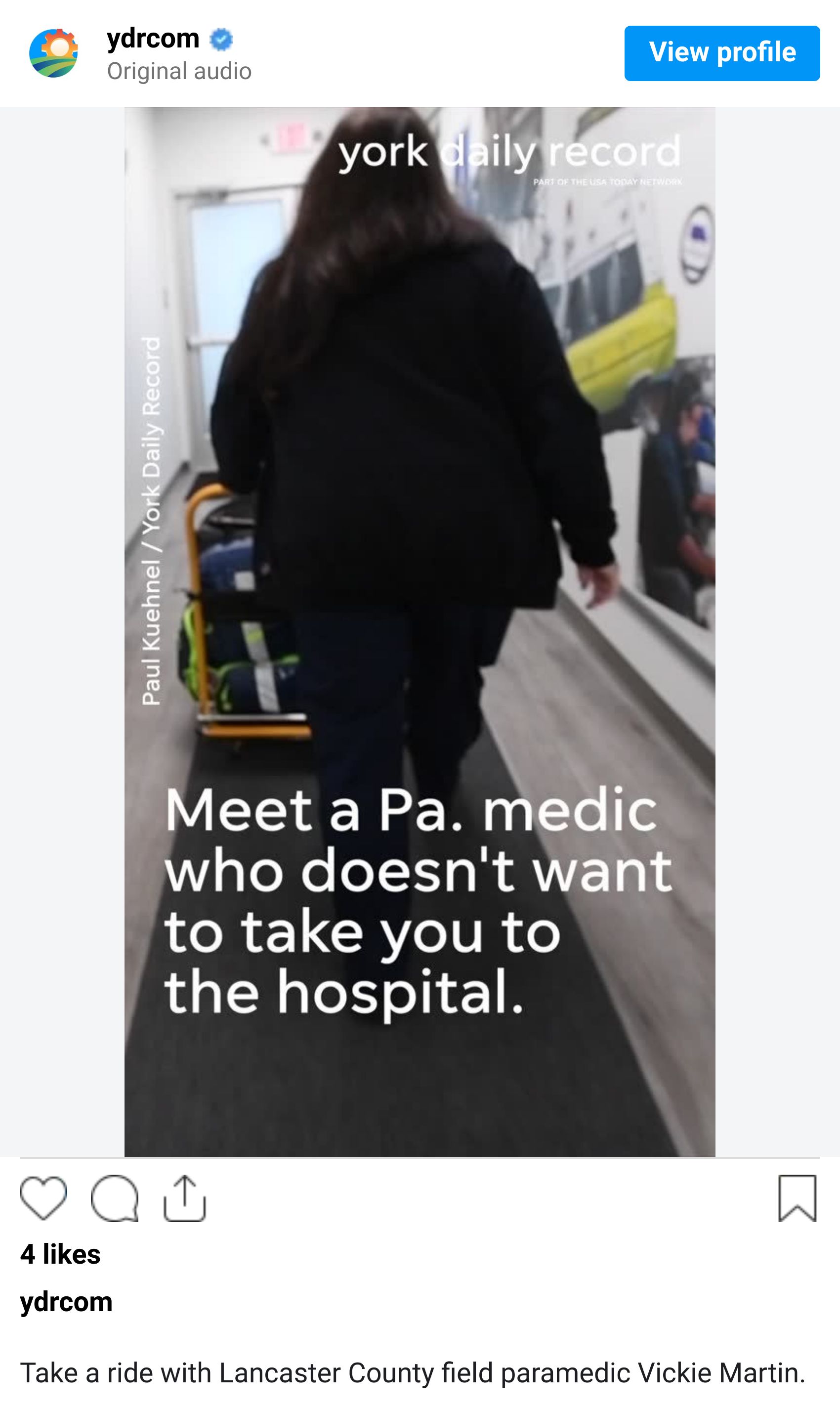
Lancaster County's community paramedicine program deploys paramedics like Vickie Martin to make non-emergency home visits, helping vulnerable patients manage medications, prevent falls, and avoid unnecessary 911 calls or hospital readmissions. The program started with 100 patients in 2016 and now serves around 1,000 people per month, with Pennsylvania looking to expand the model to rural communities that lack adequate medical providers. Despite strong evidence that these programs reduce emergency room visits and improve chronic disease outcomes, funding remains a major obstacle, as most insurers only reimburse EMS teams for transporting patients to hospitals rather than for home-based care. Pennsylvania is pursuing federal rural health grants to grow the number of state paramedicine programs from four to ten, and officials are exploring a Medicaid reimbursement pathway to make the model more financially sustainable.
Put a Little Spin on Your Spending

Step onto the court with confidence and keep your finances in play. Enjoy 0% Intro APR for 15 months on purchases and balance transfers—giving you time to focus on your game, not interest.
Earn cash back on everyday purchases in categories where you spend the most—like groceries, dining, gas, and more—plus ongoing rewards on everything else you buy. From everyday errands to post-match victory treats, earn cash back and make your spending go further.
With flexible rewards and no annual fee, it’s easy to stay in control of your budget while getting more back from your everyday purchases.
From your first serve to match point, this card helps you stay ahead—on and off the court.
Published in the Canadian Journal of Health Technologies, this horizon scan examines the growing role of artificial intelligence in prehospital emergency health care, driven in part by staffing shortages and rising patient volumes facing Canadian health care systems. AI, which relies on statistical models, algorithms, and machine learning to make predictions or generate new content, has the potential to automate clinical and administrative processes, reducing burden on health care providers.
In prehospital settings specifically, applications range from the dispatch stage (such as analyzing calls and prompting dispatchers with additional questions, or real-time speech translation) to in-ambulance tools that support traffic analysis and optimal patient management. Early AI programs targeting out-of-hospital cardiac event detection and emergency call triage during peak periods are already being piloted in some countries. However, the authors note that AI in prehospital care remains in early stages, and more real-world clinical trials and research are needed before widespread implementation can take place.