In partnership with


Something is changing around here.
For a while now, MIH Success Stories has been doing what it says on the tin, finding good news from across the mobile integrated healthcare world and bringing it to your inbox every week. That's not going away. But we're adding some new things to make each issue a little more useful, a little more engaging, and a lot more fun.
Policy Briefs: spotlighting the legislations that will impact your programs.
By the Numbers: A quick-hit stat snapshot that delivers the "so what" of the week instantly.
Region of the Week: A geographic deep dive into where MIH activity is heating up and why it matters.
Which state is the best at MIH-CP?
We're not settling this today. But over the coming weeks, we're going to look at the data, track the programs, follow the funding, and let the stories speak for themselves. You'll have a say too. By the time we're ready to call it, it'll be the most informed, most argued-over answer in community paramedicine.
Let’s dive in:
Table of Contents:
A New Policy update
Putnam and Empress EMS Collaborate on Community Paramedic Program
Region of the Week: Rural Kansas Finally Obtains Community Paramedicine
Read Time: 3 minutes

Policy Update
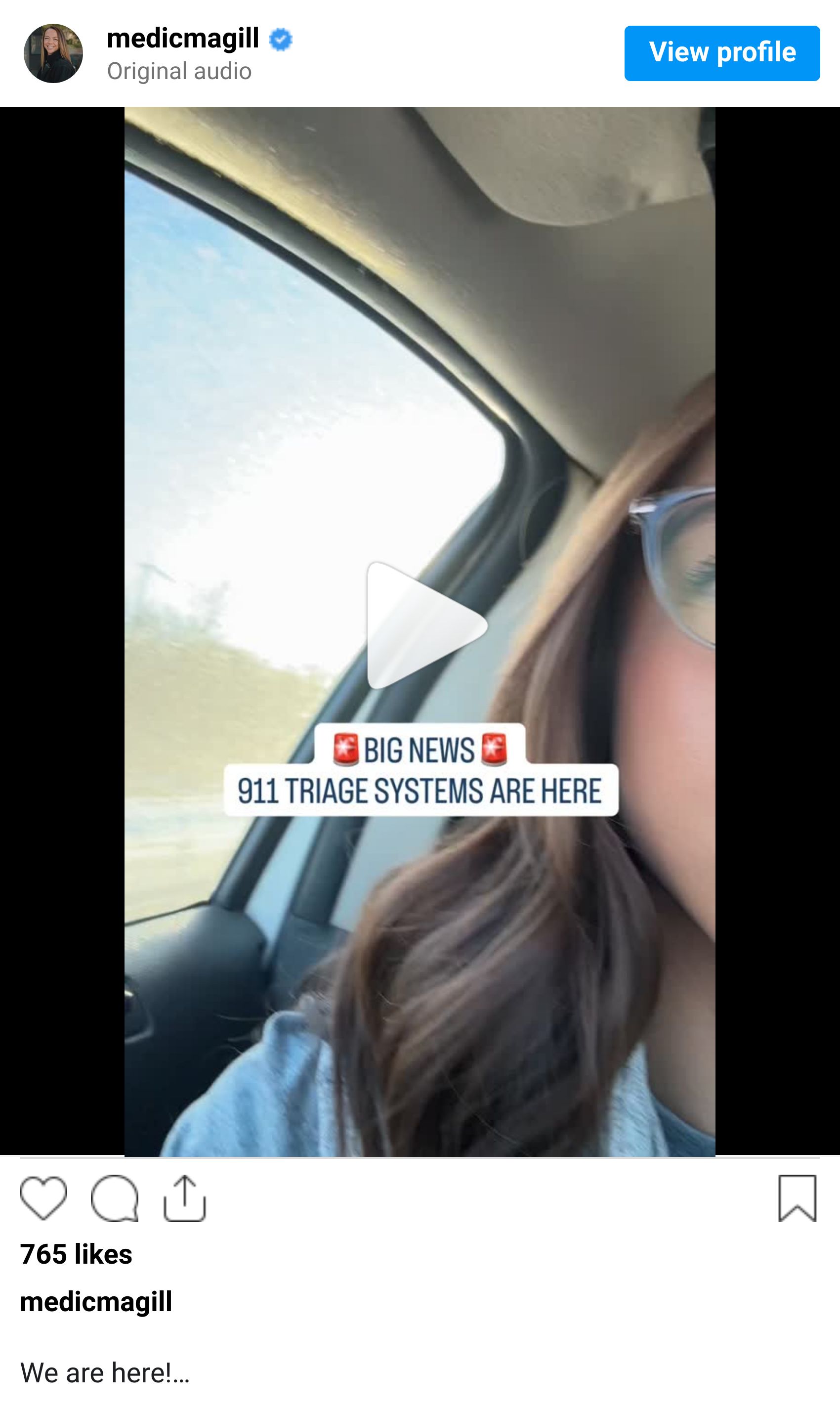

Wake County EMS is updating its 2026 response plan to use data-driven 911 call sorting that accurately matches patient needs with the most appropriate level of medical care.
This transition is highly relevant to MIH-CP as it integrates alternative pathways, such as nurse call lines and non-emergency resources, to divert low-acuity patients away from crowded emergency departments.
By prioritizing clinical outcomes over rapid transport for non-critical calls, the agency can reduce the use of lights and sirens, which improves safety for both responders and the community.
This policy mirrors core community paramedicine goals by utilizing a multidisciplinary approach to stabilize patients within the community rather than defaulting to an ambulance dispatch.
Ultimately, these changes demonstrate how modern EMS systems are evolving into integrated healthcare hubs that focus on long-term sustainability and precise patient navigation during periods of high call volume.

Sponsored By: Julota

Julota's MIH-CP software empowers community paramedics to deliver smarter, more connected care by simplifying fragmented data and streamlining processes. With real-time patient insights, automated reporting, customizable workflows, secure HIPAA and CFR-42-compliant collaboration, and actionable analytics, Julota enables impactful care and improved outcomes. Designed to bridge healthcare and social determinants of health, it helps your program stay ahead of change.
New Program

Putnam County has partnered with Empress EMS to launch a comprehensive Community Paramedicine/Mobile Integrated Healthcare (MIH) program designed to deliver medical care directly in patients' homes.
This initiative targets seniors, homebound individuals, and those with chronic conditions to provide preventive services like wound care, medication adjustments, and fall prevention.
The program utilizes telehealth consultations and in-home diagnostics to bridge gaps in healthcare access caused by provider shortages and transportation challenges in rural or suburban areas.
As the first county-wide program of its type in the state, this model demonstrates how MIH-CP can improve patient quality of life while saving taxpayer money through more efficient resource allocation.

Smart starts here.

You don't have to read everything — just the right thing. 1440's daily newsletter distills the day's biggest stories from 100+ sources into one quick, 5-minute read. It's the fastest way to stay sharp, sound informed, and actually understand what's happening in the world. Join 4.5 million readers who start their day the smart way.
Region of the Week: Dickinson County, Kansas!

Dickinson County is among the first rural areas in Kansas to launch a community paramedicine program!
Dickinson County, Kansas, has launched one of the state's first rural community paramedicine pilots, funded by an $800,000 grant to provide physician-referred home visits.
By performing medication reviews, fall-risk assessments, and home hazard identifications, the initiative aims to proactively eliminate the need for frequent 911 calls and emergency room visits.
The pilot highlights the importance of MIH-CP in rural areas where healthcare gaps are prevalent, offering services like diabetic education and wound care that are often difficult for homebound residents to access.
The county plans to use this grant-funded period to prove clinical value and transition toward a sustainable model supported by insurance and Medicare/Medicaid reimbursements.